Making Food System Connections
|
Hi Friend, so much has happened since our last newsletter. Our communities–local, national, and abroad–have been bombarded with ongoing disruption and struggle. From continued ICE raids, to the war in Iran, to lost SNAP benefits, and federal efforts to protect overgrown monopolies, there is much to grieve and to organize for. While some of these issues may seem unrelated to food and farming, we as a network understand that nothing occurs in a vacuum and that to bring into existence a food and farming future that is bright, just, and sustainable, we must acknowledge the intersectionality of our movements and stand in solidarity with those fighting all forms of oppression and exploitation. Here are some of the issues we’re watching and feeling deeply, and the ways that CFFN and its members are speaking out and taking action in solidarity.
|
This war has created great human, environmental, and economic harm. While our taxpayer dollars fund a war that reinforces our global dependence on oil and military financing, those same dollars could be feeding people, providing healthcare or childcare, and fixing infrastructure. The funds to build a better world exist.
Meanwhile, farmers across the U.S. have already felt the economic hit, one of many direct impacts on our food and farming economy, leading to scarcity, delays, debt, and high costs across the food supply chain and for consumers. These impacts are not projected to end soon, but we can turn to solutions already at our disposal: Agroecology. Our network member, CalCAN, outlines the impacts of the war on our farmers and makes the case for farming that is focused on enriching the health of our soil.
|
Closer to home, ICE-driven detention has caused hardship and loss for families across the nation. Since October of 2025, 29 individuals have died in DHS-run detention facilities. Time in detention has meant illness, denial of medication, and a deprivation of fresh fruits and vegetables. For family members outside, it has meant the loss of breadwinner income, the loss of a caretaker, and emotional trauma from the disappearance of a family member. Groups have organized funds to purchase inflated commissary items and family phone calls, while legislators in California have introduced bills to reduce the harm caused by ICE, such as AB 2495 (Kalra), which would deter immigration-related coercion in employment. This bill is one of five CFFN Ally bills, which are bills that are outside of food and farming issues but relate to our greater vision. These bills either impact similar communities most impacted by the food and farming system, share our values, or address a systemic issue that the food and farming system is bound by.
|
Corporate consolidation in and out of the food system has made it difficult for Californians to live a life that they can afford. Farmland in California has been consolidating rapidly, driving up land prices and cutting off opportunities for small and new growers. As our network member, CAFF, has extensively documented, 5 percent of all landowners own over half of California’s cropland, and state policies are key in leading California back to more equitable farmer-first practices.
And because there is no shortage of corporate profiteering, the California Attorney General Rob Bonta has recently released unredacted files proving that Walmart, Amazon, Target, and other big names have been price fixing products to maintain their profit margins. This is further evidence that providing workers with living wages is not what’s driving increased prices; excessive growth powered by greed is. One tool for reigning in monopolies within the food system and beyond is AB 1776 (Aguiar-Curry), The COMPETE Act, another one of our ally bills, which will expand California antitrust law so that a single firm — not just colluding monopolies — can be held liable for anti-competitive behavior.
|
Where CFFN Priority Bills Come in
|
In the face of heightened global conflict, loss, and insecurity, our network and members are running bills that boldly protect and build opportunity for workers, small farmers, and local economies, those who have lost benefits and access to food. California can provide what communities are desperately seeking: dignity and assurance in a food and farming system that can withstand all these external factors.
|
Improved Access to Healthy Food
|
AB 1049 (Rodriguez) – California Food Assistance Program – Sponsor Deeming Removes sponsor deeming from the eligibility determination process for the California Food Assistance Program (CFAP), streamlining enrollment into food benefits and reducing the chilling effect for sponsored immigrants as part of the Food4All campaign.
AB 2299 (Calderon) – California Anti-Hunger Response & Employment/Training (CARET) Act Will provide state-funded benefits for the ~665,000 Californians at risk of being cut off from CalFresh in 2026-27 due to the discriminatory federal work requirement time limit rules named in H.R 1.
AB 1857 (Aguiar-Curry) – Grocery Store Access Act Prohibits restrictive covenants that limit grocery and supermarket use in order to expand food access, reduce food deserts, and improve food affordability and health outcomes. Co-sponsored by CFFN!)
Check out this blog post from the Berkeley Food Institute that covers this issue and its relationship to corporate profiteering!
|
Farmworker and Food Chain Worker Advancements
|
AB 1731 (Wilson) – Healthy Food Procurement Fund Program Directs the Office of Farm to Fork to establish an approved vendor program and procurement fund by 2028 to expand K–12 schools’ access to whole or minimally processed, California-grown foods produced using climate-smart agriculture practices. (Budget ask)
Local Food Purchase Assistance Program (LFPA), Farms Together, Budget Priority (Assm. Pellerin, Sen. Hurtado) A values-based procurement program that invests in and connects small farmers and food hubs with local food banks. Seeking $45 million in General Funds for CDFA to sustain a previously $100 million federally-funded program threatening to collapse small farm businesses.(Budget ask)
|
Land Access for Socially Disadvantaged and Beginning Farmers Program (Assm Wilson) A re-attempt via the budget process of last year’s CFFN priority: AB 524 (Wilson) – Farmland Access and Conservation for Thriving Communities Act). Seeking statutory language to guide Proposition 4 Climate Bond Investments that will provide financial or technical resources to support farmers with land tenure through a new program at the Dept of Conservation; requesting $15 million from Prop 4.
|
Additional Food and Farm Bills
|
While CFFN has a priority bill list, we also make an effort to support other bills that are headed by our network members.
|
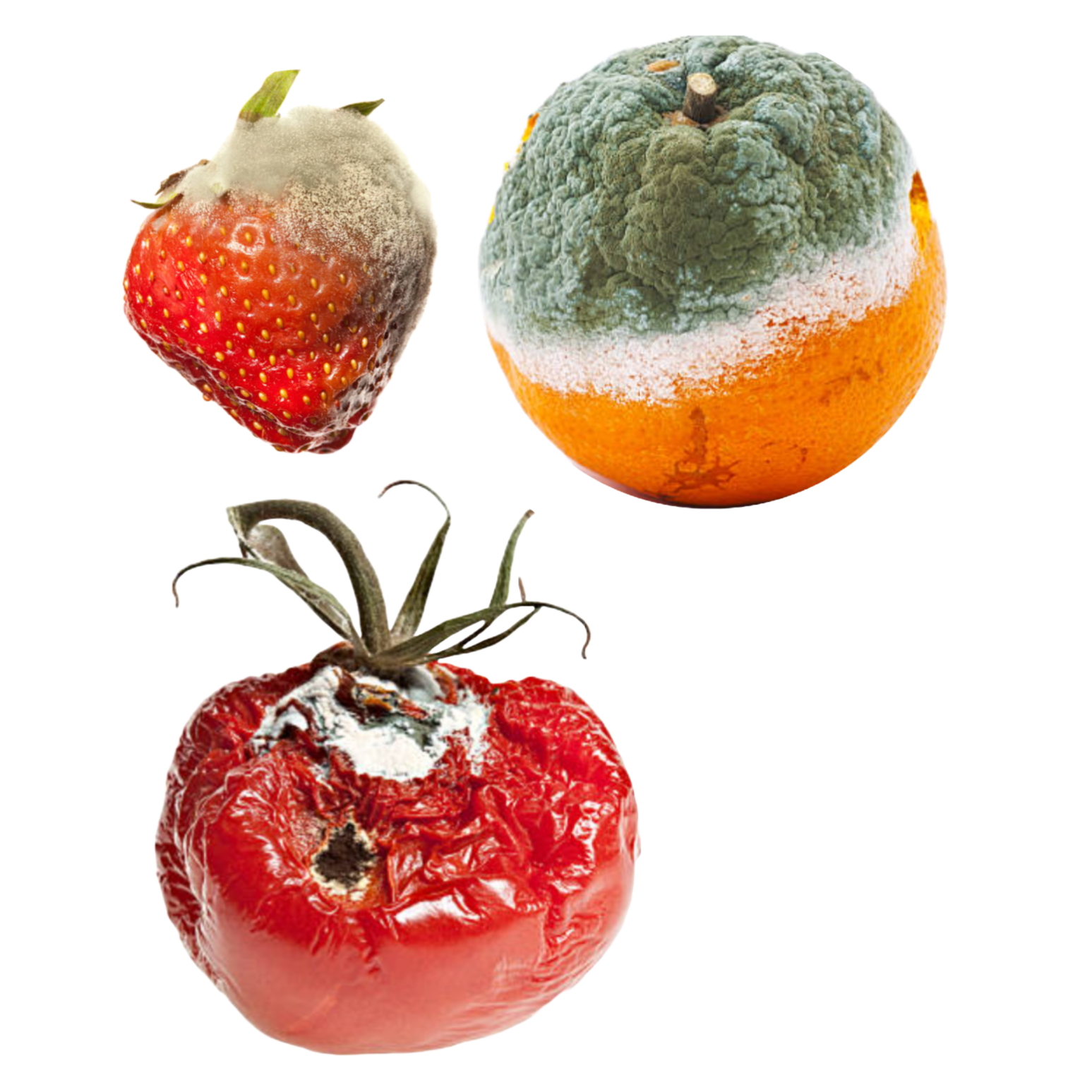
“Rotten Food and Farm Bills”
|
These bills claim to center equality or health, but they punish our most vulnerable communities and reinforce harmful and false stereotypes that people experiencing poverty can’t make healthy decisions for themselves, ignoring the actual drivers of unhealthy diets: income, corporate control, and time. With collective action from our Network, all of these rotten bills have died!
AB 2171 (Patterson) – CalFresh Purchase Restrictions – OPPOSE Would have prohibited CalFresh recipients from using benefits to purchase sweetened drinks and candy.
SB 1134 (Stickland) – CalFresh Purchase Restrictions – OPPOSE Would have prohibited CalFresh recipients from using benefits to purchase candy, energy drinks, prepared desserts, and sodas.
SB 1419 (Alvarado-Gil) – Gutting the Farmer Equity Act – OPPOSE Would have rewritten the definition of socially disadvantaged farmers and ranchers—replacing clear, race-conscious language rooted in documented historical injustice with vague economic criteria, creating new administrative burdens and privacy concerns for farmers.
|
What We’ve Been Up to Lately
|
Food and Farm Advocacy Day was a Success!
|
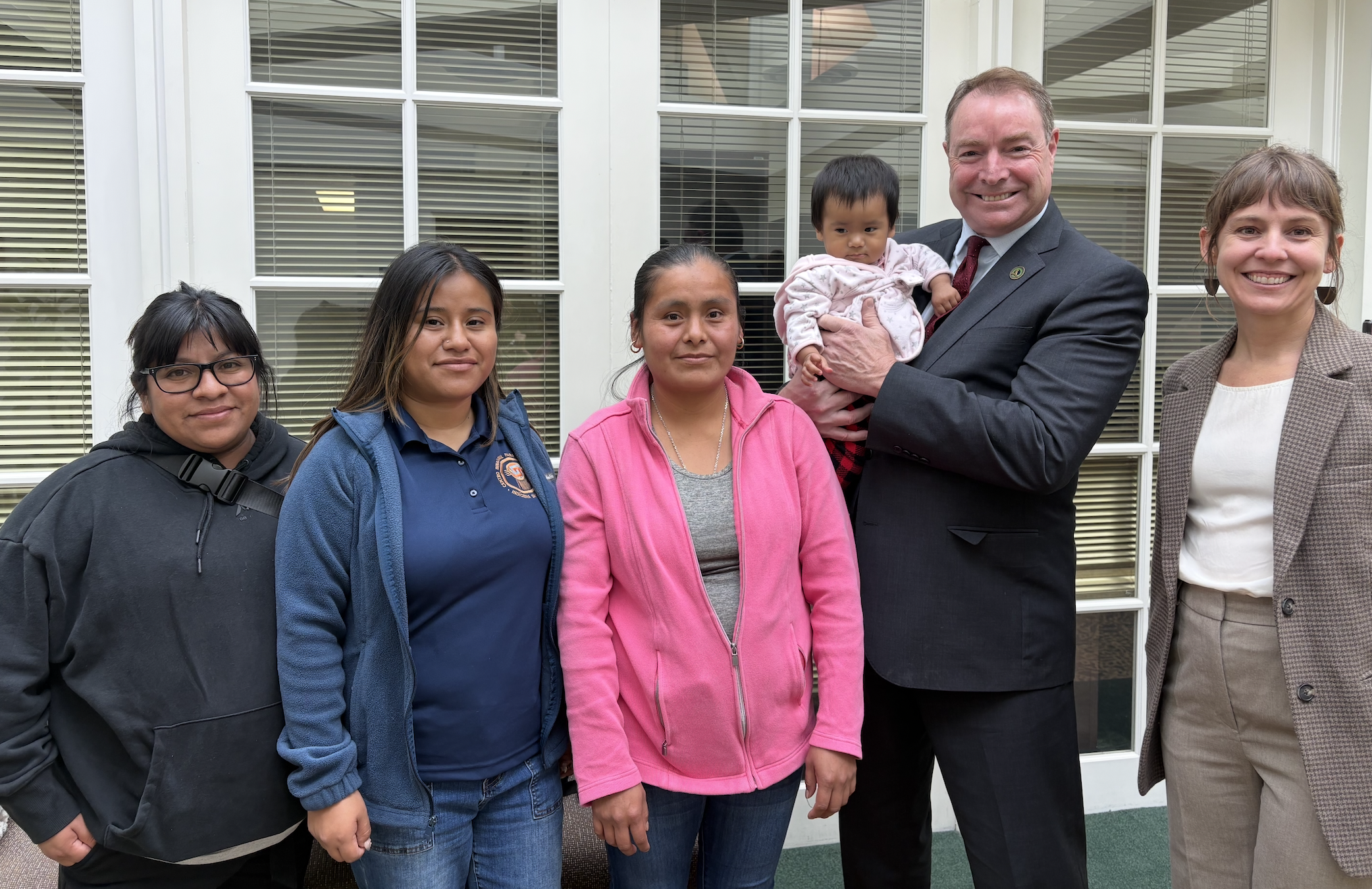
In February, a group of CFFN members gathered at the Capitol to introduce issues and priorities to Assemblymembers and Senators.
We had some exciting conversations with staffers and legislators and are looking forward to working with their offices in the years to come!
|
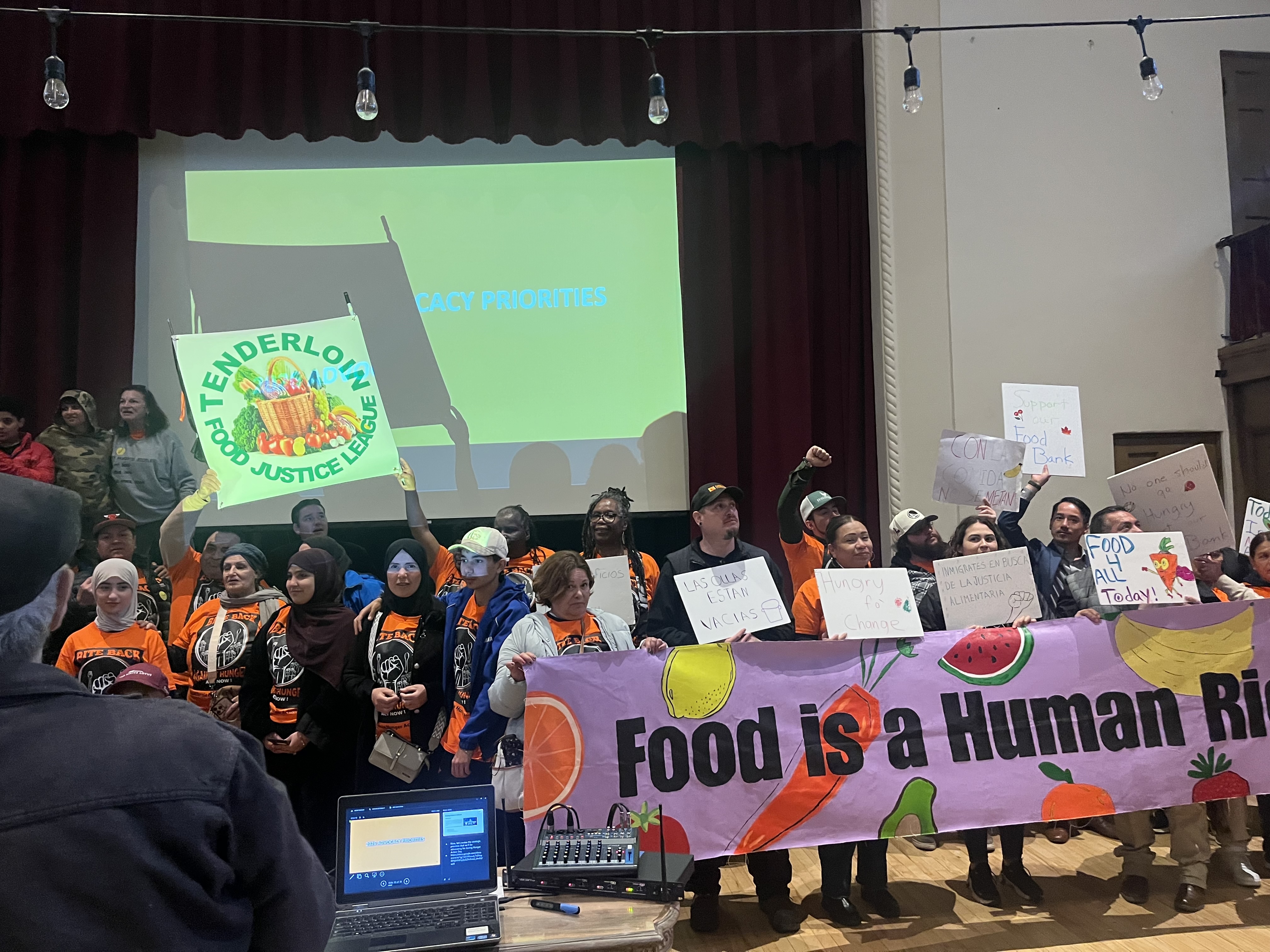
And finally, many of our members have been visiting the Capitol over these last two weeks for Immigrant Day of Action, Hunger Action Day, and Ag Day! Check out some of our photos!
|
Celebrating 2025 Food and Farm Champions!
|
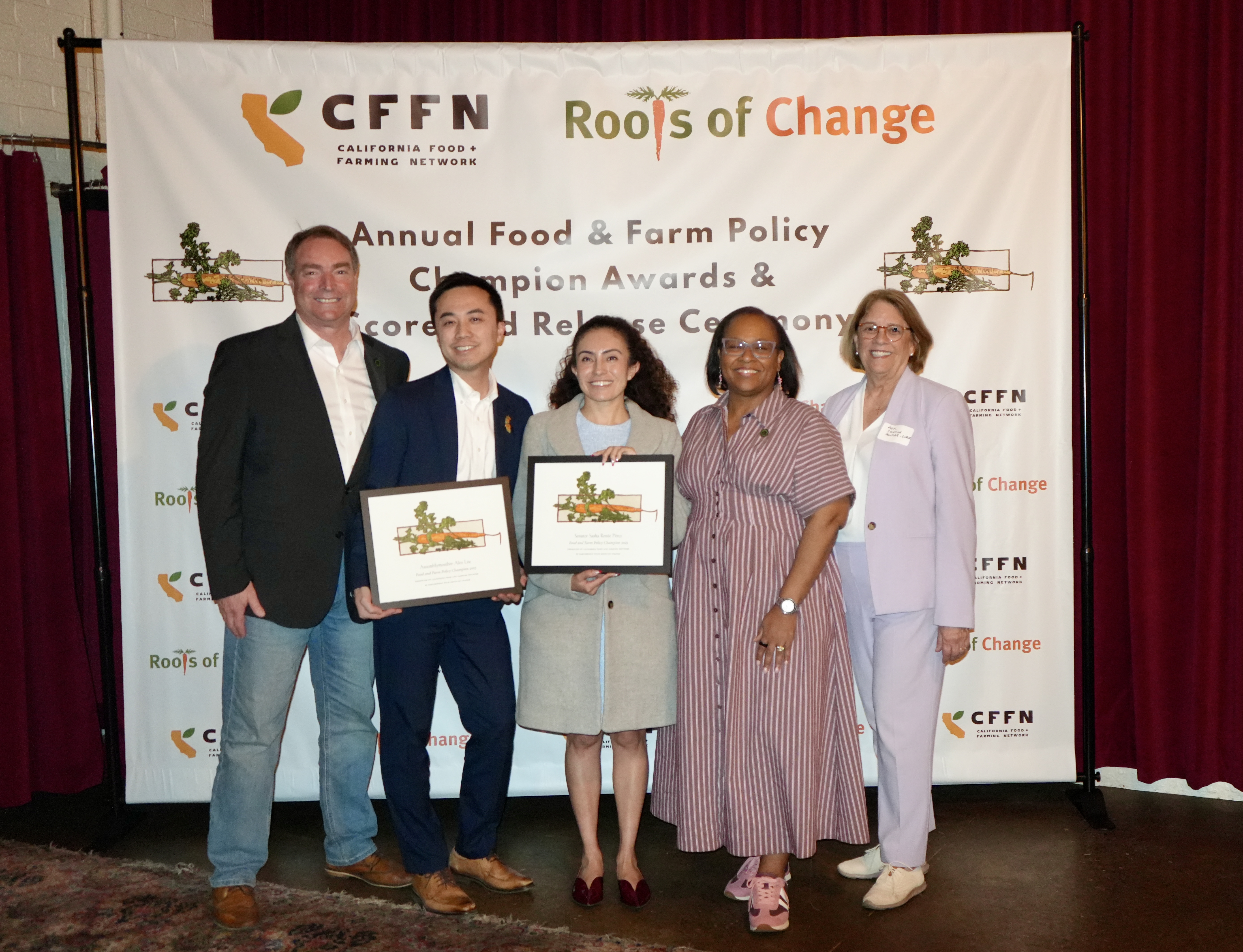
Also in February, we got to recognize our 2025 legislative champions, Assemblymember Alex Lee and Senator Sasha Renée Pérez, for their commitment to progressing our food and farming system toward resiliency and justice.
|
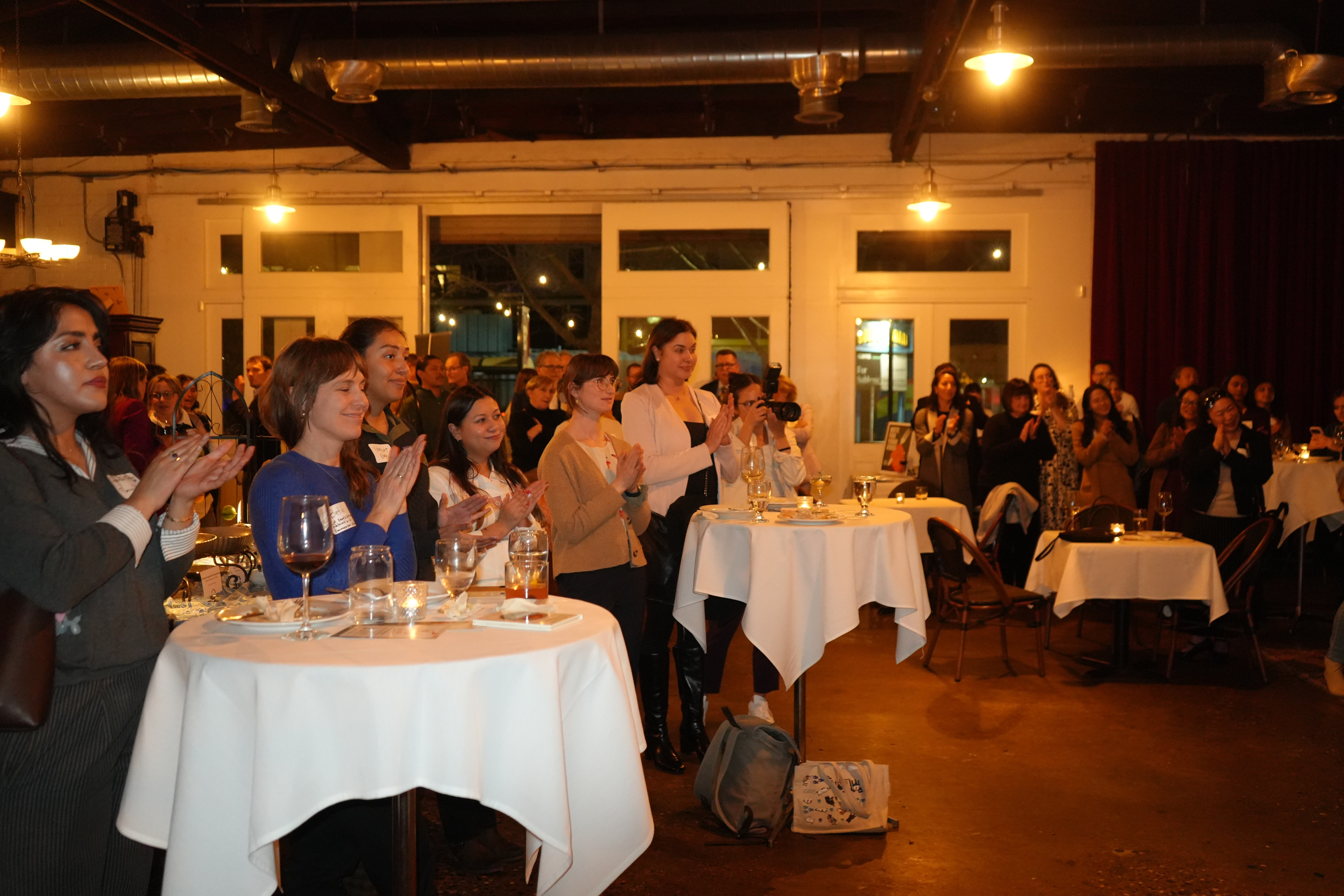
They were joined by some of our alumni champions at our annual Scorecard Release Party, including Assemblymember Damon Connolly, Assemblymember Lori Wilson, and Assemblymember Aguiar-Curry. You can learn more about our two champions and the scores given to the rest of the legislature in our 2025 Food and Farm Scorecard!
|
That is all for now! Thank you for keeping up with us!
|
The California Food and Farming Network is building a movement centered on racial equity to transform the food and farming system through state policies.
|
CFFN envisions an inclusive, equitable, and ecologically regenerative food and farming system that has recognized and repaired injustices to Black, Indigenous and people of color workers, producers and communities, and which generates healthy, affordable, accessible, nutritious and culturally appropriate food and other agricultural products.
|
|